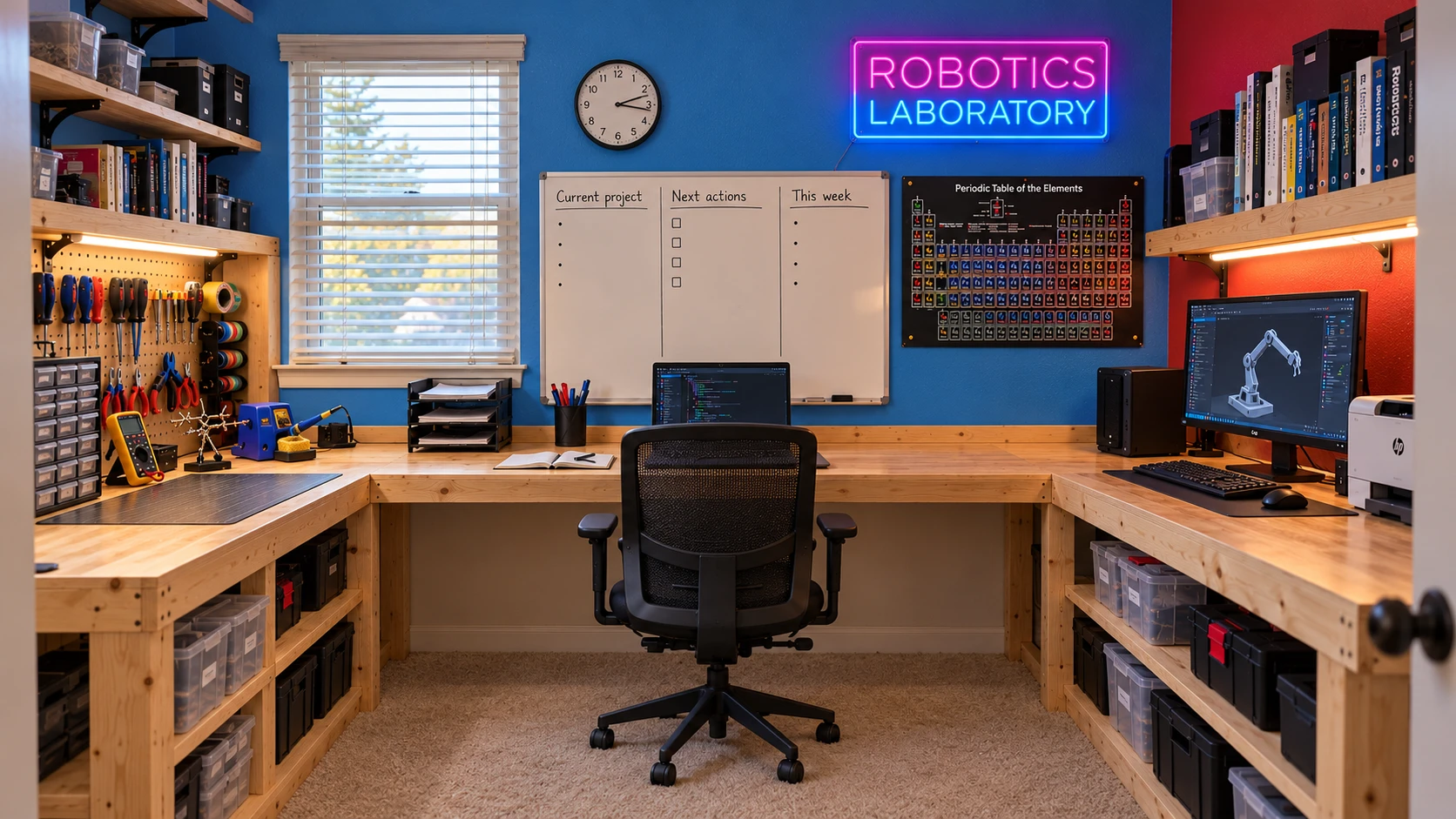
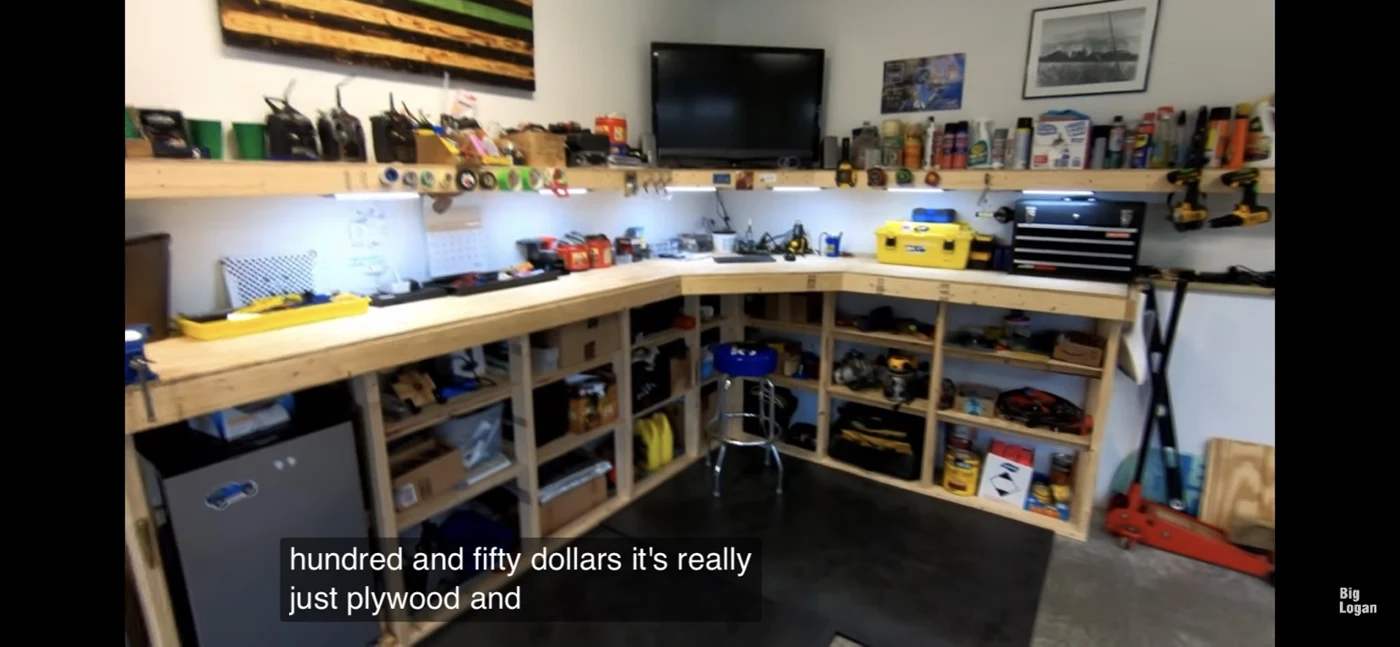
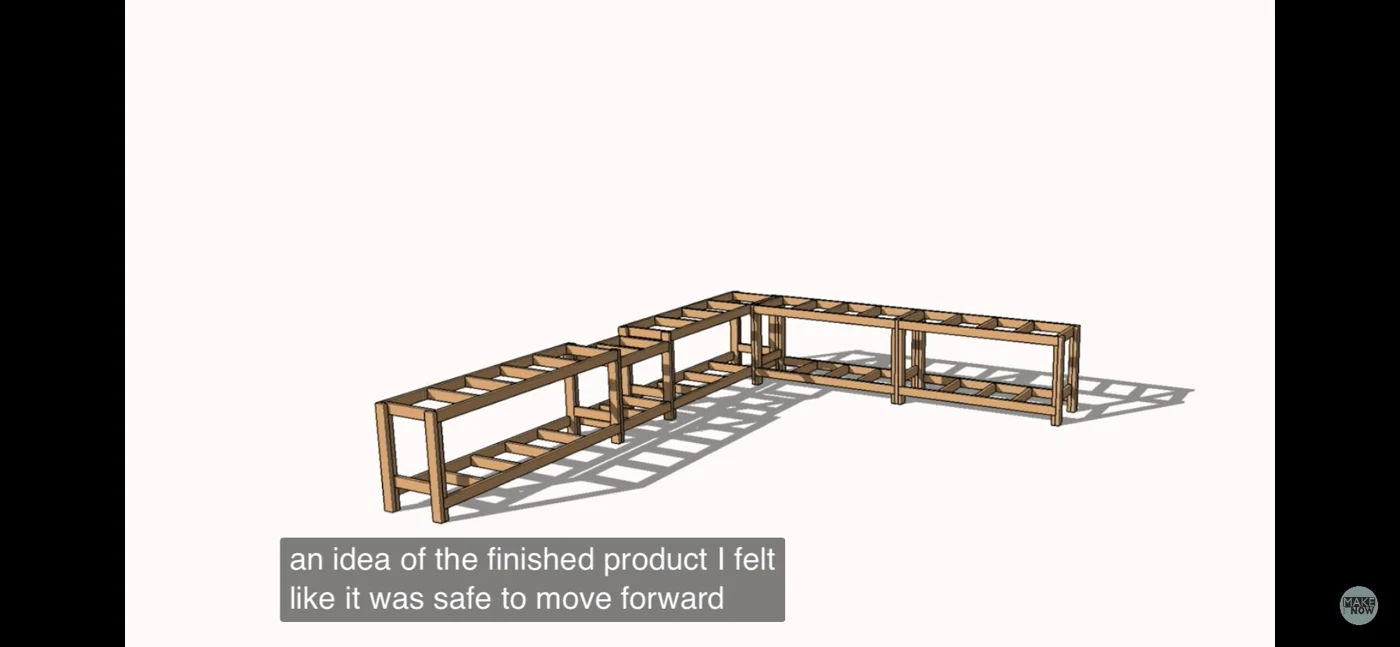
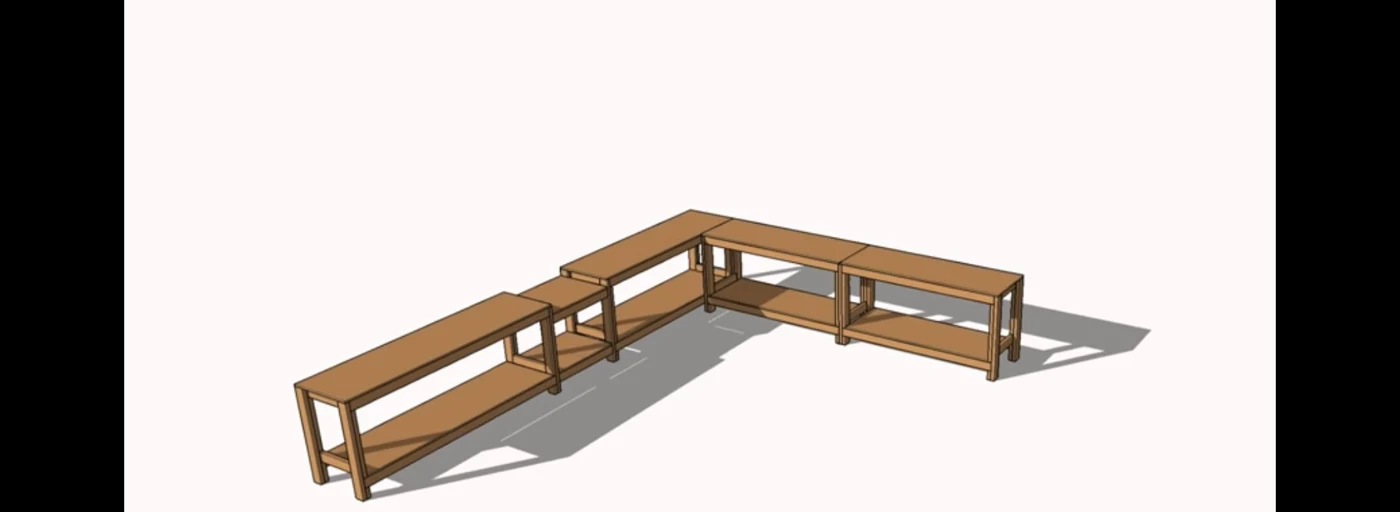
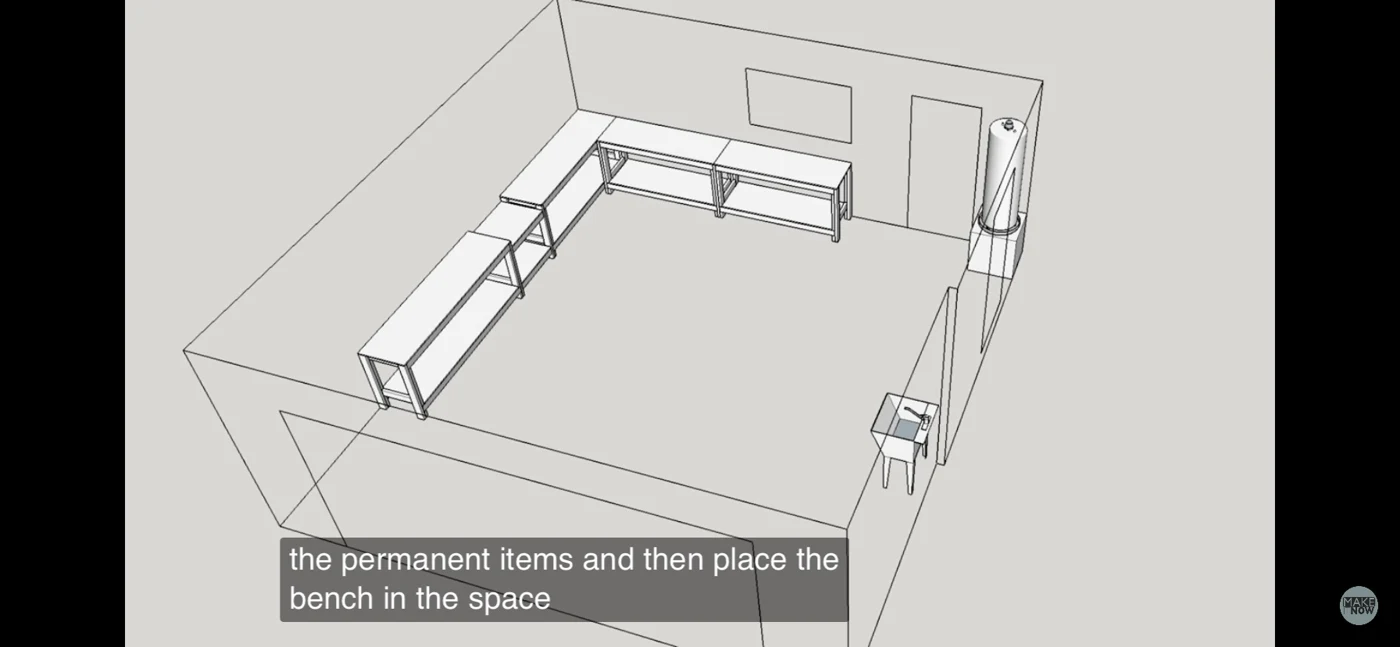
I researched different YouTube tutorials to gather ideas, find inspiration, and learn how to construct workbenches. I applied what I learned to assemble two connected workstations for Robotics Laboratory. Together, they support my learning, business administration, project development, and publication.
My first creation: Study and skill development
My first workstation is where I organize the hardcopy materials I use as a sole proprietor for business administration, including accounting, economics, legal matters, and statistics. It also holds my study materials in science, technology, engineering, and mathematics (STEM).
I use this space to develop my vocational aptitude through general science, arithmetic reasoning, word knowledge, paragraph comprehension, and mathematics knowledge. My studies extend to English composition, quantitative reasoning, arts and humanities, social and behavioral sciences, and physical and biological sciences.
Alongside my academic and professional learning, I practice calligraphy, learn guitar, and study the Quran. This workstation gives me a place to read, write, work through concepts, and practice different skill sets. By mastering the basics, I build a foundation for deeper knowledge and professional expertise.
My second creation: Technology and information systems
My second workstation brings together computers, peripherals, software, apps, and digital services to support the business objectives of Robotics Laboratory. I use this space to organize my digital information, research ideas, develop projects, document results, and prepare my work for publication.
I bring together iOS, Google Workspace, Microsoft tools, and social media as part of the information systems I manage. These systems connect my technology, records, and working processes so I can move from learning and planning to creating and sharing my work.
Software and digital services
I organize my digital tools around the activities they support:
- Business administration: Documents, spreadsheets, financial records, and business tracking.
- Information management: Digital files, cloud storage, notes, reference materials, and backups.
- Planning and coordination: Calendars, scheduling, task lists, and project tracking.
- Research and learning: Web research, educational videos, digital study materials, and AI assistance.
- Communication and collaboration: Email, contacts, online meetings, and shared documents.
- Content creation and publishing: Presentations, graphics, digital media, social media, and website content.
- Performance management: Scorecards, charts, trackers, and reviews of progress toward objectives.
Technology and digital communications
I use mobile apps, cloud tools, and productivity software to organize information, schedule work, and track business activities. I manage social media and digital communication channels to share my work and connect with others.
I select and connect tools around the practical tasks they support, developing workflows that help me maintain organized, accurate business documentation.
Together, my two workstations connect hardcopy and digital information. My first workstation supports reading, writing, concept development, and skill building; my second supports organizing, developing, documenting, and publishing that work through Robotics Laboratory.
Learning through construction
Constructing the workbenches connected my learning with practical applications of tools, fasteners, measurement, assembly, and mechanical principles.
Researching tutorials and applying their methods helped me turn ideas into a physical workspace that supports the laboratory’s development.
My warrior scholar motto
My motto is to develop myself as a warrior scholar, cultivating discipline, knowledge, practical skills, and character. I study leadership traits and values, general orders, creeds, and codes of conduct to guide my decisions, strengthen my responsibility, and develop my capacity to lead.
I use individual scorecards to set goals, record practice, and review my progress across four dimensions:
- Intellectual development: Learning, comprehension, reasoning, and applying knowledge.
- Spiritual development: Faith, Quran study, reflection, and religious practice.
- Emotional development: Self-awareness, emotional regulation, empathy, and relationships.
- Physical development: Fitness, strength, endurance, recovery, and consistent habits.
I track observable habits, skills, and outcomes to identify strengths and areas for improvement. These scorecards connect my personal development with my exploration of performance management: setting objectives, measuring progress, reviewing results, and refining my approach.
My workspace and warrior scholar motto support my development as a whole person, bringing together how I think, what I believe, how I relate to others, and how I strengthen my body.