Operational vehicle · Management system in development
Using an existing vehicle to support income generation while developing practical skills in business operations, recordkeeping, and performance management.
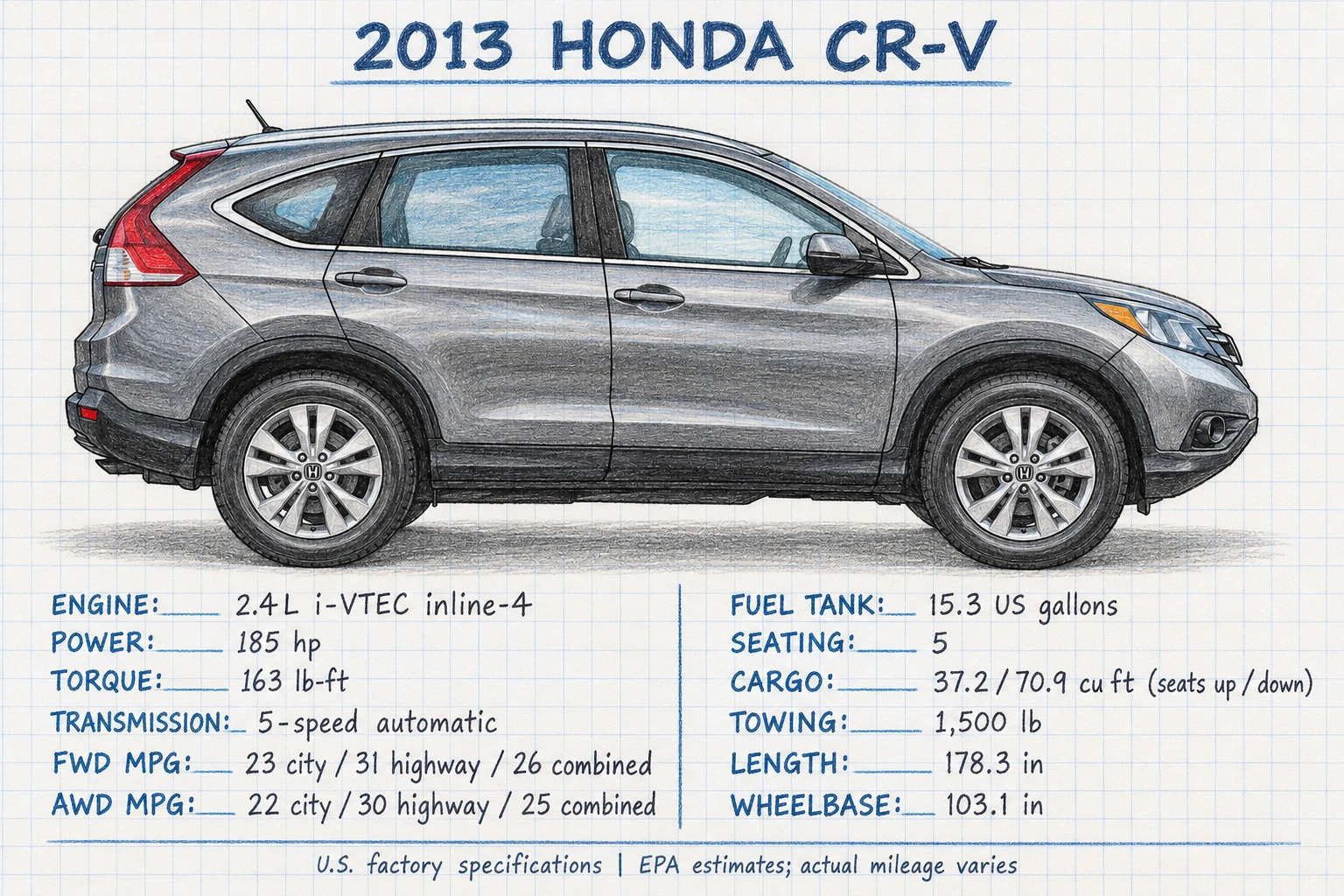
Illustrated vehicle profile. U.S. factory specifications are shown for reference; trim and drivetrain have not yet been documented.
Maintenance & upgrade plan
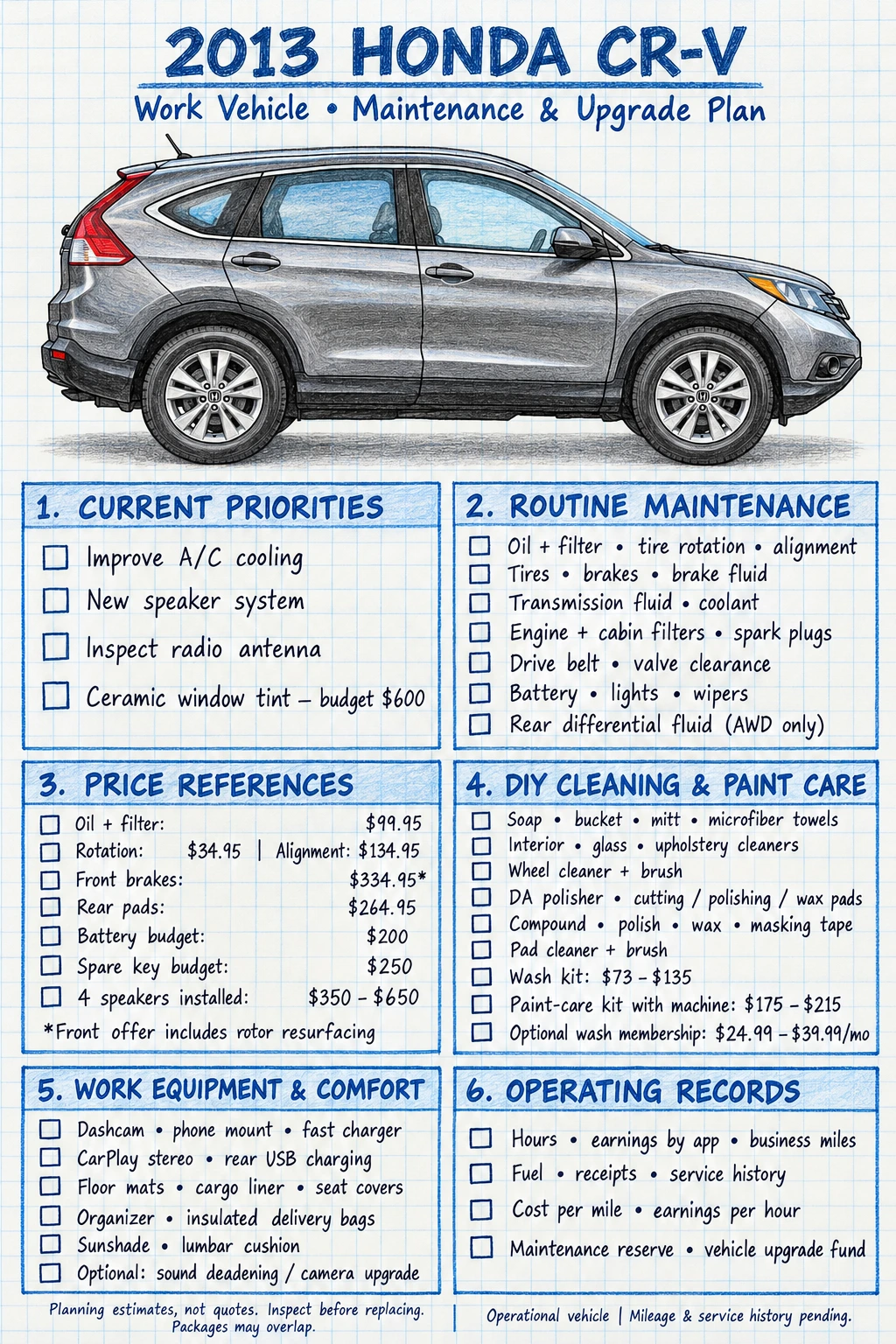
A graph-paper working plan brings together vehicle care, equipment, DIY detailing, and the records needed to evaluate contract work.
Planning sheet · October 19, 2026. Open the image to view it at full size. Prices are provisional references, not quotes or completed purchases; service packages may overlap.
Current priorities
Diagnose insufficient A/C cooling.
Install a new speaker system and test the source of the current loss of sound.
Inspect suspected radio-antenna damage.
Obtain a quote for heat-reducing ceramic window tint; provisional budget: $600.
Maintenance and equipment
Track oil and filter changes, tires and rotation, alignment, brakes and brake fluid, transmission fluid, coolant, filters, spark plugs, belt condition, valve clearance, battery, lights, and wipers. Rear differential service applies only if the vehicle has AWD. Inspection and service history determine what is due.
I wash and detail the vehicle myself, including machine compounding, polishing, and waxing when appropriate. The supply plan covers wash products, interior and glass cleaners, microfiber towels, pads, compound, polish, wax, and pad-cleaning tools. A car-wash membership remains optional.
Proposed work equipment includes a dashcam, phone mount and charging, protective mats and covers, cargo organization, insulated delivery bags, and a sunshade. Additional comfort and audio improvements will be evaluated against the operating budget.
Budget references
Battery reserve: $200; spare-key reserve: $250; four speakers installed: $350–$650; DIY wash kit: $73–$135; paint-care kit including a machine: $175–$215. These are earlier research estimates and allowances, not an assessment that replacement is currently needed.
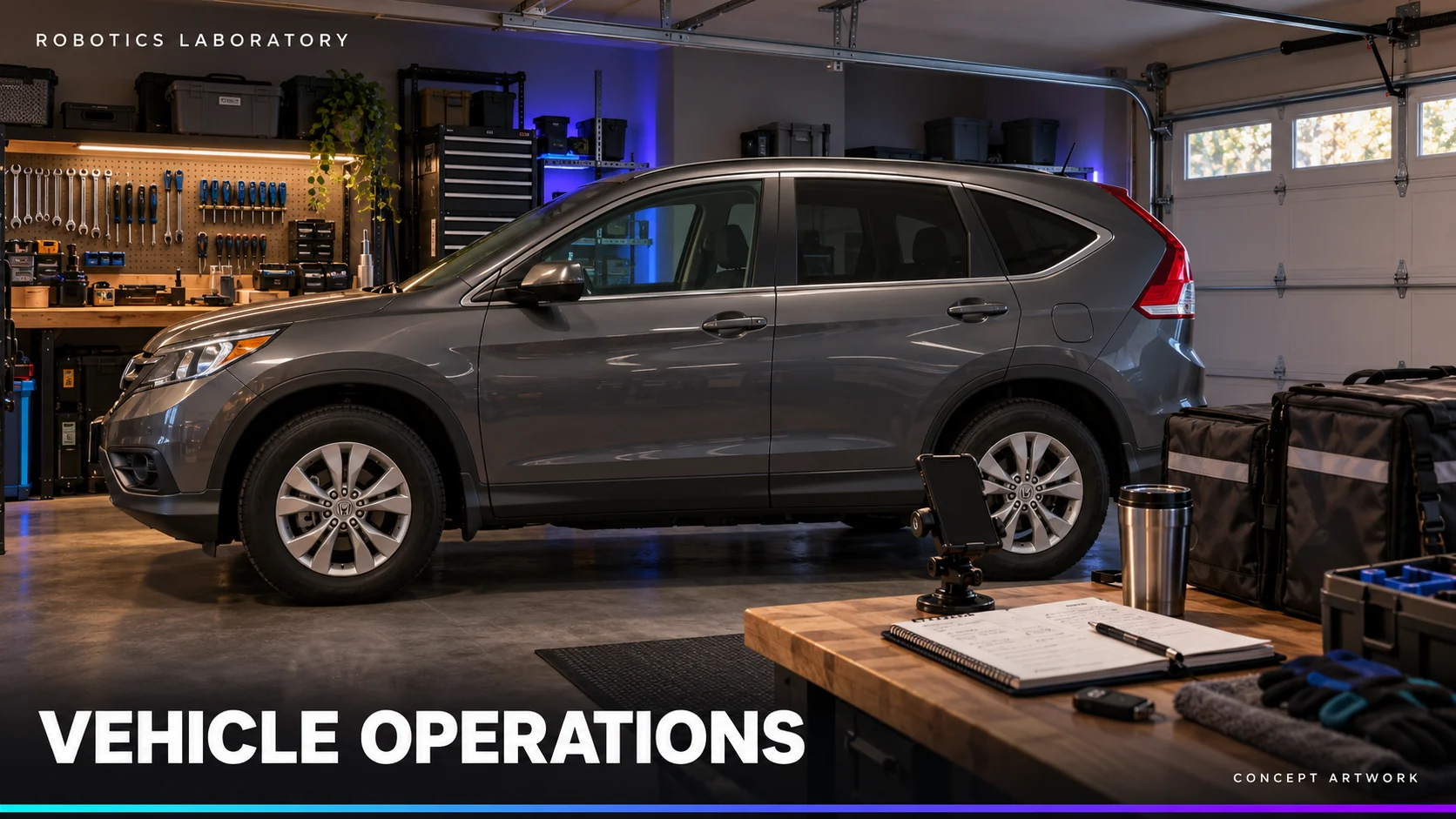
My gray 2013 Honda CR-V is operational, with insufficient cabin cooling and a loss of speaker sound identified for attention. I plan to use it for independent contract work through Uber, Lyft, and DoorDash while building the means to upgrade my vehicle. This project documents how I organize the work, care for the asset, and evaluate its financial performance.
The vehicle is available for work. Odometer readings, service history, and operating results will be added to private working records as they become available. Platform eligibility and account status are separate from vehicle readiness.
Operating system
Readiness: develop a routine for tires, fluids, lights, brakes, cleanliness, and air conditioning.
Work setup: organize a secure phone mount, charging, insulated delivery bags, and cleaning supplies.
Daily records: capture work hours, earnings by platform, business mileage, and expenses.
Maintenance: record service dates, odometer readings, costs, and upcoming work.
Financial review: reconcile platform statements and receipts, plan maintenance reserves, and set an affordable upgrade contribution.
These are the planned elements of the management system, rather than a claim that every tool or record is already in use.
Performance measures
I will review gross earnings per work hour, operating cost per business mile, maintenance spending, and income remaining after expenses. Work time will include waiting and repositioning so that the record reflects the full commitment.
Cash remaining after daily payments is a cash-flow measure. Evaluating profitability also requires accounting for maintenance, insurance allocation, depreciation, and other vehicle costs. Consistent records will support comparisons over time.
Vehicle profile
The U.S.-market 2013 CR-V uses a 2.4-liter four-cylinder engine producing 185 horsepower with a five-speed automatic transmission. EPA estimates are 23 city / 31 highway / 26 combined MPG for FWD and 22 / 30 / 25 for AWD. Actual mileage varies.
It seats five, has a 15.3-gallon fuel tank, and provides 37.2 cubic feet of cargo space behind the rear seats or 70.9 with them folded. The exact trim and drivetrain will be confirmed later.
My immediate priority is dependable operation and a clear understanding of earnings and costs. Future vehicle requirements will be informed by actual work: reliability, fuel use, comfort, cargo capacity, and total ownership cost.
Next milestone
Document the starting odometer reading and service baseline, then complete a first week of consistent activity records. Review the results before setting income targets or a vehicle-upgrade savings schedule.
Lessons and evidence
This project will connect scheduling, customer service, asset care, and financial management through direct experience. No measured earnings, savings, or efficiency improvements are being claimed yet. Personal financial records and identifying vehicle details remain private.